
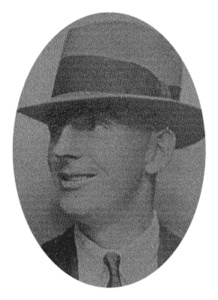
1895-1962
HAVERING PARK — THE HISTORY
The Havering Park Estate, part of the parish of Havering-atte-Bower, is referred to in the Romford Registers as far back as 1561, even though the village has a much earlier recorded history. After the death of Charles I, the Park was divided into two farms and later into three. The Bower (Manor) Farm, representing the old Manor House, lay near to the Church. Havering Park, the lower part of the property, was leased separately.
One of the occupants of Bower Farm was a Mr. Collinson Hall, who lived there in the first half of the nineteenth century. He was a very capable and progressive farmer, being one of the first to make a business of sending milk to London; the steam-plough was largely his invention. He is commemorated by a monument in the chancel arch of St. John’s Church.
Havering Park Farm was leased at the same time by a Mr. James Ellis, a well-known hop grower from Barming in Kent, who was eventually reputed to be the largest hop grower in the world. He planted hops at Havering Park: after his death in 1845 at the age of 76, and as a result of a very bad hop harvest, the land was ploughed up and returned to general arable and mixed farming interests.
The majority of the head leases of the Havering Park Estate during the early nineteenth century were owned by Mr. Hugh McIntosh. He was a very successful building contractor; and was responsible for the building of the London and Greenwich Railway and much of the East India Docks. He died in 1840 leaving all of his estate and titles to his only son and heir, David McIntosh. Somewhere between 1847 and 1850, Mr. David McIntosh came to reside at Havering-atte-Bower.
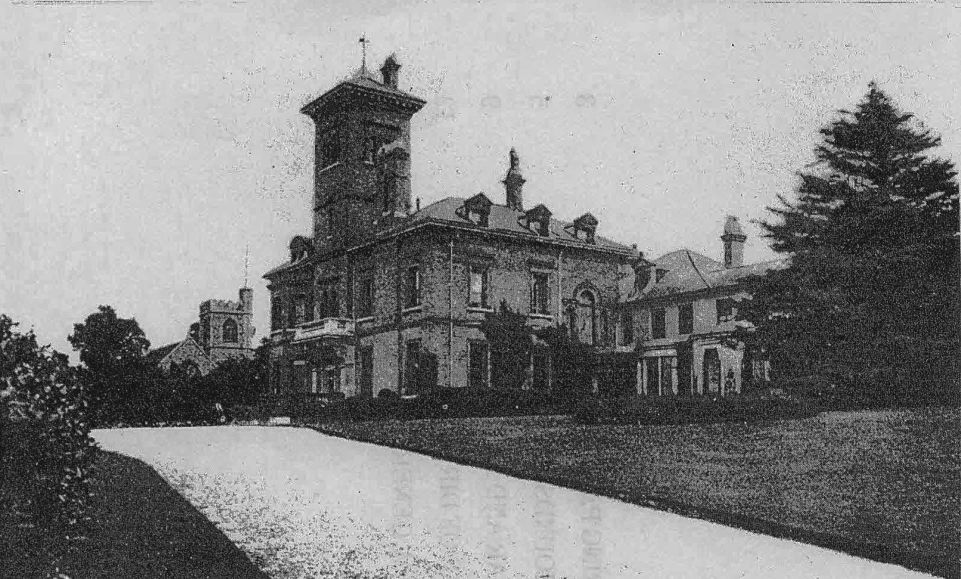
He built the mansion of Havering Park on the site of the old Bower (Manor) Farm, transferring the name Bower Farm to a new establishment down the Park (now called Bower Farm), and began the task of laying out the estate. The mansion was of Italianate design, made of brick with a tower. Part of the mansion building programme included the coach and stable block which now forms the centre of the Havering Park Riding School and Club complex. Provision was made within the stable block for four carriages, ten horses, fodder storage (now the loft), and grooms’ quarters.
It took Mr McIntosh until 1870 to complete all the building work and vast landscaping of the estate. Besides this project he also took a prominent part in the rebuilding of the new Church on the green, which was completed in 1878. In 1876 he married Charlotte Marian, daughter of Christopher and Lady Sophia Tower of Huntsmore Park, Buckinghamshire. He died in 1881, aged 66. Mrs. McIntosh continued to live at Havering Park until her death in December 1923.
The trustees of the McIntosh estate sold 1,500 acres which formed the greater part of the holding to Allen Ansell for £33,757 in September 1924, the remaining parts being split into small plots, each being sold separately.
The mansion house fell into a bad state of repair and was demolished. Allen Ansell leased back certain parts of the estate for mixed farming to various tenants.
Fortunately indeed, the coach and stable block was seen as having a potential use as a “dog rest” for training of greyhounds for Clapton Stadium Ltd. In July 1931 they purchased from Allen Ansell 27.95 acres of ground for £3,150. Included in this sale was the coach and stable block, the two cottages on the corner of Havering Green and the triangular piece of land between Wellingtonia Avenue and Bower Farm Road. Later that year an additional 5.399 acres was purchased and added to the holding.
Quite unknown to the happenings at Havering Park a Mr. Hugh Smyth, an Ulsterman with a farming background, making his way to England; first as a “boy” soldier in an Eniskillen Regiment to do service in the 1914-18 War, to be followed by a regular soldier’s career with The King’s Own Household Cavalry. Hugh’s love and knowledge of horses was deep rooted. He was required to work with them on his father’s farm, and was involved with all the stable routines from a very early age. To Hugh this work was a labour of love. His twelve years in the Cavalry introduced him to the knowledge and skill of riding and to the correctness and necessity of efficient stable management.
On leaving the army, Hugh, whilst wishing to pursue a career with horses, was unable to find a suitable opportunity. He joined Clapton Stadium Ltd. and assisted them with the breeding and training of greyhounds. It was to Hugh that they turned in late 1931 to manage, on their behalf a “dog rest” at Havering Park.
In the spring of 1932, by mutual arrangement, Hugh was to leave the direct employ of Clapton Stadium. He leased from them the facilities at Havering Park, on the under-standing that he would continue to provide a service for their “resting” greyhounds. This apparent generosity by Clapton Stadium was because they considered that the holding’s potential was not being realised, and they had no wish to farm the land themselves.
This gave Hugh the opportunity he was looking for to set up in business for himself, and lay the foundation of the Havering Park Riding School and Club in the summer of 1932.
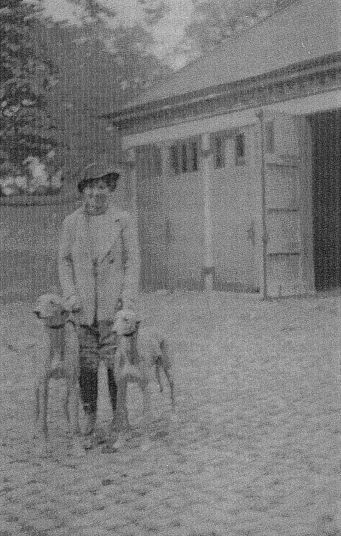
GREYHOUNDS
TO HORSES
From the onset of this new business venture in 1932 Hugh Smyth was to live at Havering-atte-Bower; his first abode was one of the cottages next to the main stable block on the corner of the village green.
After the death of Mrs. McIntosh in 1923, the estate, and particularly the buildings, fell into a very bad state of repair. Without any capital behind him, it was a question of making the best use of everything and do-it-yourself repairs. It was a very hard struggle from the start; the country was trying to climb out of a world recession and the future held little prospect for permanent peace in Europe.
The supportive income for the business came from having the greyhounds at Havering Park. Clapton Stadium would have between twenty and thirty greyhounds at Havering at any one time. Each dog would have care instructions from its trainer, and Hugh was required to feed, exercise and nurse them accordingly.
The greyhounds were kennelled in either the main stable block, using the horse stalls, or in purpose-built kennels and runs situated on a site that is now occupied by the outside manege and livery turn-out.
Greyhounds were not new to Hugh, since his family in Ireland were then, and still are, leading breeders and trainers.
Horses arrived at Havering Park, under Hugh’s control for the first time in 1934, when an executive of Clapton Stadium asked Hugh to take four horses at livery for him. These horses were named Nigger, a 16.1h dark bay gelding; Betty, a 14.2h brown cob; Rosslyn, a 4.2h chestnut mare, and Nipper, a 16h dark bay ex-racehorse.
Livery arrangements in those days were on a full service basis. The owner, or his guests, gave Hugh the ride-time in advance and the appropriate horse(s) were prepared and tacked up awaiting the rider’s pleasure.
In 1936, Hugh was given the opportunity of purchasing these original four horses; a chance he seized upon. With his own horses now, for the first time, Hugh was able to advertise that he had horses for hire. The hire charge was five shillings per hour, with no tuition. A client would book a ride, and then turn up and take the horse for an unescorted ride. Shoeing costs in that year amounted to four shillings and sixpence per set.
As the hire business progressed, albeit very slowly, three other horses arrived at the School during the early part of 1937; two on livery arrangements and one for the School. The School horse was named Sheri, a 15.2h chestnut gelding. He was blind in one eye but, despite this handicap, was to become the muscle power for all the farm work in later years.
With the ever increasing uncertainties of the European situation and the very real threat of war, Clapton Stadium had decided to sell the Havering Park Estate. One estate was eventually purchased by Essex County Council in October 1938. The land was acquired and protected by the Green Belt legislation. Hugh was offered an agricultural tenancy on the holding by the Essex County Council, and they have remained the principal landlord ever since.
A reliable source has stated that Hugh, a very able rider, used to organise with other local horsemen, “flapper” meetings for their Sunday afternoon enjoyment. These were held on the then open ground that now makes up the Collier Row Nash Estate and the G.L.C. Country Park. Riders would bet against the result, with the first past the post taking all.
The last greyhound left Havering Park in December 1938, bringing to a close Hugh’s long associations with Clapton Stadium. As a result Hugh had to look to his horses for a living income, and explore other ways of developing his business.
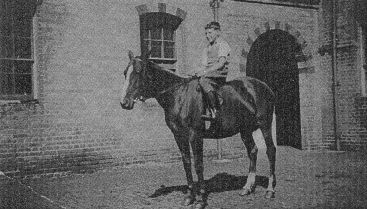
THE WAR
AND AFTER
Britain preparing for war brought about major changes at Havering Park. Hugh was required to farm the holding and introduce livestock as part of the war effort. The Army requisitioned two of his best horses for “service”, and he was asked to keep only working horses at the stables.
Hugh decided to keep Sheri on to work the land, and let the remaining horses he owned go to a relation’s farm near Great Dunmow. These horses were ridden the thirty-five miles by Hugh and two of his friends.
During the early part of the war, Hugh was to become a farmer by day and a village air-raid warden by night. All the suitable grassland was ploughed up and corn and potatoes planted. Sheri provided the power for the farm machinery and Hugh was once again reliving his childhood of using working horses on a farm.
Chickens had already in a small way, been part of the scene at Havering, but during the war he was required to increase egg production. The number of chickens was raised to several hundred. They occupied the old greyhound runs and the kennels were enlarged to house them. Pigs, cattle and goats were also, in turn, to be part of Hugh’s mixed farming programme.
As life settled down to a pattern under the state of war, Hugh was able to bring back his horses to Havering and provide, in addition to farming activity, horses for hire and a livery service for a privileged group of clients.
Hugh met and married Miss Florence Nelson in October 1941 and they moved into living accommodation constructed within the main stable block. Florence was a qualified midwife, and at the time of meeting Hugh was engaged as a private nurse by a family in Havering village.
Florence and Hugh were to have their own family, three sons and a daughter. The first child arrived in late 1943.
Hugh had all the necessary practical knowledge and experience to run a riding school and farm, but it was to Florence he turned to assist him with the increasing administration required to run a business.
During the summer of 1944, a Miss Rose Crawford was to visit the school to ride, as part of an outing organised by her employer’s social club. Rose was working for an ammunition factory. Following several organised visits, Rose was to return on many occasions to ride and be involved with the day-to-day care of the horses. Gradually, because of her considerable interest and willingness to learn, Hugh was to ask her to assist him at weekends and to escort various rides. Rose became Hugh’s first full-time employee in the latter part of 1946.
With the war over, the School began to take shape, and plan for the future. The name “school” became part of the title, and from that time the business was called Havering Park Riding School. Gradually the stock was increased to ten horses and ponies, with an additional three kept at livery. Riding actually occupied most of the weekends, weather permitting, with general farming and care of stock undertaken during the week. The first published riding programme was introduced in 1947. By then, it was the practice to escort the majority of the rides. Mid-week riding was very rare, and Hugh and Rose had many hectic experiences of keeping the horses fit and properly exercised mid-week, during the winter months.
The first Riding Club was set up in 1949 and its headquarters was in the original granary store in the loft above the stable block. Also in that year mechanisation, in the form of a tractor, came to the school to assist the ageing Sheri. Typical of Hugh, who incidentally was a non-driver, to have it delivered and then to consider who was to use it! It was to Florence he turned in the early days to drive and use the tractor around the farm, until he could make other arrangements. A Dutch barn was erected, together with a tractor shed, in 1950.
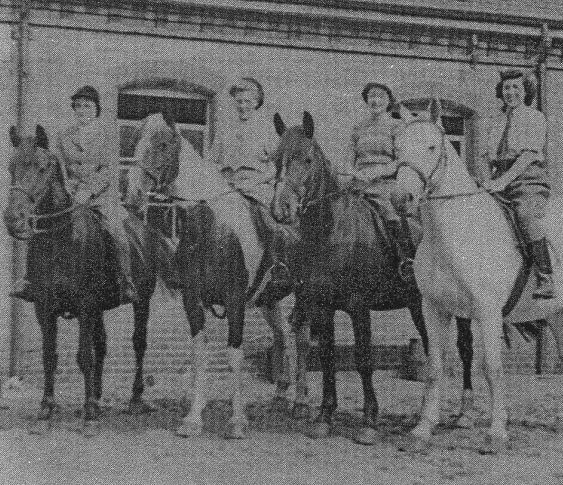
(Horses are L.R. Beauty, Trixie, Dinah and Silver)
During the early part of 1951 an outside manège and training ring were constructed on the site, now occupied by the indoor school. A jumping lane was also built in the copse that runs along the boundary fence in Bower Farm Road. These aids to teaching were to meet an increasing demand from clients for more specific riding tuition. Rose was sent on various teaching courses, and the school was then in a position to meet this need. This move was to prove most successful, as the School was one of the first in the district to offer qualified tuition.
Capital to enable the business to expand was always a problem for Hugh and Florence, and it was therefore decided that Florence should return to her nursing career. She became a district midwife and was able to work from her home, and still assist Hugh with the administrative side of the business.
The division of responsibilities remained unchanged throughout the fifties; the School’s position as a riding establishment was growing. Rose gradually took over the majority of the teaching and supervision of the horses’ welfare and stable routines. As Hugh, by then in his sixties, was unable to farm at his earlier pace, he gradually returned arable land to pasture and reduced considerably other livestock commitments. By 1959, chickens were down to less than a hundred, and pigs to a couple of aged sows.
In 1959 Florence and Hugh moved from the accommodation at the School, to a bungalow in Wellingtonia Avenue, built on the same site as the original Havering Park Mansion. Rose was then shortly afterwards, to occupy the empty accommodation at the School.
CHANGE OF DIRECTION
Hugh, the School’s founder, was to die quite suddenly after a short illness in August 1962, aged 67. This left Florence and four teenaged children with a major decision to make concerning the Schools future. Given wonderful support from Rose and much encouragement from clients, Florence decided to continue with the business. Considerable financial commitments necessitated her continuing with her nursing. Rose was appointed manageress of the business and under her direction the School was soon back to normal business. Additional full-time staff were employed to assist with the increasing workload.
What a first year it proved to be! The very severe winter of 1963 resulted in no riding activity for nearly three months. First came the snow, followed by weeks of frost that kept the snow and ice on the ground making riding impossible. The School was facing a crisis. The School’s income was almost nil during that time, and it had to be supplemented by Florence’s other career. Positive action was therefore necessary, and it was decided by her to take on an extra financial gamble and build an indoor school.
The indoor school was built during 1964 and has proved since then to be one of the most successful assets in the history of the School’s development.
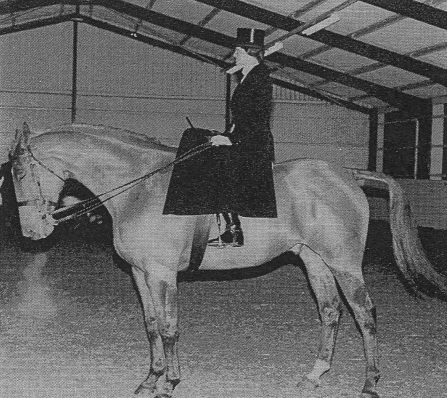
It also became policy at this time, to introduce evening instructional lessons for senior and junior riders, and develop a programme of riding tests. Membership of the Association of British Riding Schools was also sought and obtained.
During 1966, the now familiar “housewife” rides were introduced to meet the need for riding during mid-week. In addition, the School sought after and obtained council contracts to provide riding for local schoolchildren.
The demand for riding was continuing to increase, and a number of clients had purchased their own horses by this time. A few, when space allowed, were kept at livery at the School, but the majority found alternative stable around the village. As a result, several do-it-yourself livery yards began to open up to cater for the demand.
Riding was being popularised to the public at large by television and the interest in equestrian activity shown by the Royal Family. To meet the demand of this newly introduced clientelle required an extensive expansion of the Schools stock and stabling in the late sixties, much of the reconstruction work was carried out by a most loyal employee, Mr. Dick Cook. Dick came to the School soon after the death of Hugh to undertake the general maintenance and heavy work around the establishment. He was also a most able repairer of saddlery and harness.
The number of horses and ponies had increased to 25 with an additional 15 on various terms of livery. As Rose extended her own equestrian knowledge, she also developed a very strong ambition to breed her own foals from mares that she owned. It was during this period she was able to realise this ambition, and she has continued to be involved with breeding her own foals ever since.
THE NEW GENERATION
Florence retired from her nursing career in 1972, but continued to run the School with Rose until 1976. During the early part of 1976, she felt it was time for her to retire properly and relinquish her business responsibilities. After much deliberation within the then grown-up family, it was
agreed that her son David should purchase the business from her, and thereby secure its future.
David, until that time, had pursued his own career in newspaper publishing in Fleet Street. He was married to Joyce and they had two young sons.
The sale of the business was agreed in December 1976; but Florence and David worked together with Rose and her staff to effect an orderly transfer until its completion in March 1977. The Essex County Council also agreed and granted David the tenancy of the holding at the same time. In retirement Florence keeps an active but distant interest in the happenings at the School.
From the outset, it was necessary for David to have a complete review of the business to ascertain the next stages of its development. Trying hard not to radically change or interfere with a successful formula of the last decade, it was decided to concentrate on trying to improve standards and provide clients with new and upgraded fringe facilities. In 1977, a public viewing gallery was added to the indoor school; as well as a waiting-room providing refreshments at weekends. The staff position was strengthened, and Rose was appointed General Manageress of the business, with particular responsibilities for staff, teaching and animal welfare.
The School was running very near to capacity during 1978, so it was decided to reduce the number of livery places at the School, and increase and improve the number of School horses. An outside manège was constructed to assist with the demand for specialist teaching, and an improved cross-country course was built. In October 1978, a more comprehensive programme of weekly riding was introduced to cater for the various needs of the clients.
Storage space for fodder was always a problem at the School. The ever increasing cost of buying-in small quantities, brought about a decision in January 1979 to build a new barn, complete with granary store and mechanised milling equipment. This enabled the School to bulk-buy and store the major part of its annual consumption of fodder. The School was using some 4,000 bales of hay, 5,000 bales of straw and 40 tonne of whole oats at that time.
Since the days when Hugh farmed the land extensively for various crops, the ground had been returned to pasture, and, over the years, was showing the signs of being overgrazed. It was therefore decided, in 1979, to commence a programme of re-seeding the various paddocks with 5-year grass lays, to provide the growth of grass for summer grazing of the horses.
The School used the services of the village blacksmith Mr. Con Rowland until his semi-retirement in 1962. Since then, Mr. Stan Dobberson has been the blacksmith for the School, and he was joined by his son on the round in 1979. A purpose-built blacksmith shop was built for their use in September 1979.
In 1980 the business was reorganised by David into a joint-partnership with Joyce, who was beginning to take an increasing role in its various activities. At the same time, the business was renamed Havering Park Riding School and Club, so as to reflect the broader interests it was developing.
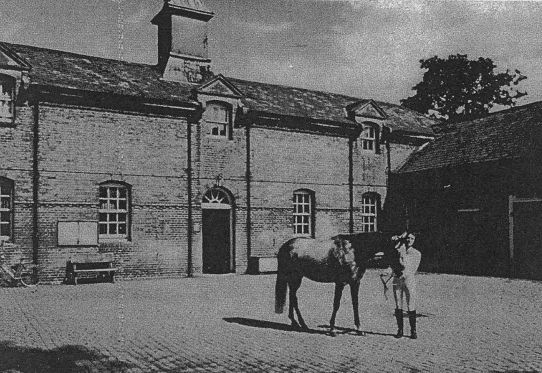
During 1980 and 1981, the estate was completely refenced on all its boundary lines, and the buildings were given a facelift to improve their general appearance. Additional stabling and stalls were built, so as to accommodate each animal during the winter months.
A Proprietors’ Club was launched in January 1981, to provide clients with a base to broaden their equestrian knowledge, and for the purpose of social activity. The loft above the main stable block was completely renovated for the purpose, and now provided a purpose-built clubroom, bar
and toilet facilities. A regular programme of meetings, lectures, practical demonstrations and socials is put on by the Proprietors for Club Members.
The School now provides a series of Horse Management Courses and continues its policy of improving both the quality of its stock and the level of its teaching. For many years the School provided riding facilities for the disabled, particularly the mentally handicapped, and in 1981 the establishment was confirmed as a centre for this purpose.
Fifty years on, the Havering Park Riding School and Club can look back, with much pride, on its orderly development during that time to one of the leading equestrian centres in Essex.
This article is a reproduction of ‘Havering Park Riding School and Club Golden Jubilee 1932-1982, A brief history by D. H. Smyth‘. With a dedication of thanks to Hugh, Florence and Rose.