
The following text was created by gemini.google.com
A Glimpse into the Past: Havering-atte-bower
Perched on one of the highest points in East London, Havering-atte-bower is a village steeped in royal intrigue and ancient history. Its name roughly translates to “Havering-at-the-Bower,” referring to its long-standing status as a favored royal retreat.
Key Historical Milestones
- Saxon Origins: Legend suggests the village was a favorite spot for Edward the Confessor. It is said he sought the peace of the “Bower” to escape the singing of nightingales that distracted him from his prayers.
- The Royal Liberty: In 1465, Edward IV granted the area the status of a Royal Liberty. This gave the local residents unique privileges, such as being exempt from certain taxes and having their own independent court system.
- The Royal Palace: For centuries, a palace stood here, serving as a residence for monarchs including Henry VIII and Elizabeth I. While the original palace eventually fell into ruin, its legacy remains in the village’s prestigious character.
- Victorian Transformation: By the 19th century, the village became a hub for wealthy Londoners looking to build country estates, leading to the construction of grand houses like The Round House and Havering Park.
Heritage Sites to Note
| Landmark | Significance |
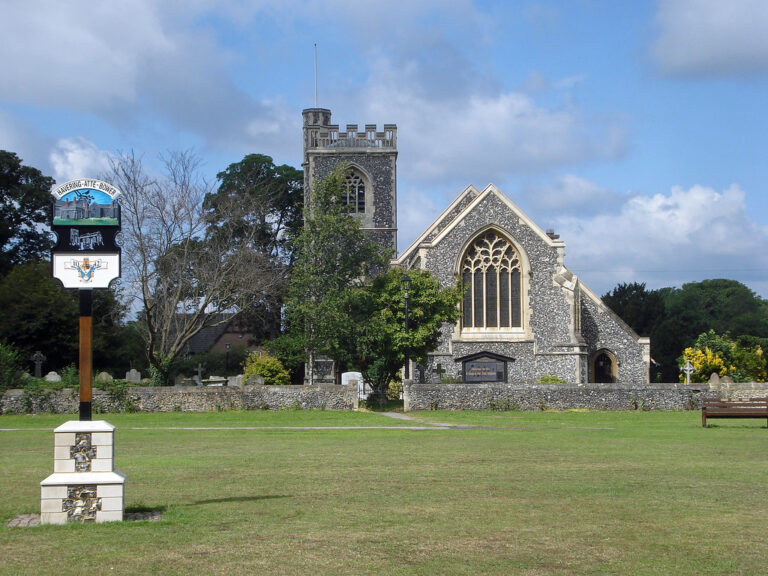
| St. John the Evangelist Church | Rebuilt in 1878, it sits on the site of the ancient royal chapel. |
| The Village Green | Home to the historic stocks and whipping post, a reminder of medieval justice. |
| Pyrgo Park | Once the site of a secondary royal palace used by various English Queens. |
Did you know? The village is so high up that on a clear day, you can see across the Thames Valley all the way to the landmarks of Central London and the hills of Kent.
Why it Matters Today
Today, Havering-atte-bower remains one of the most picturesque spots in the London Borough of Havering. It successfully maintains a rural, “time-capsule” feel despite being just a few miles from the hustle and bustle of Romford.