
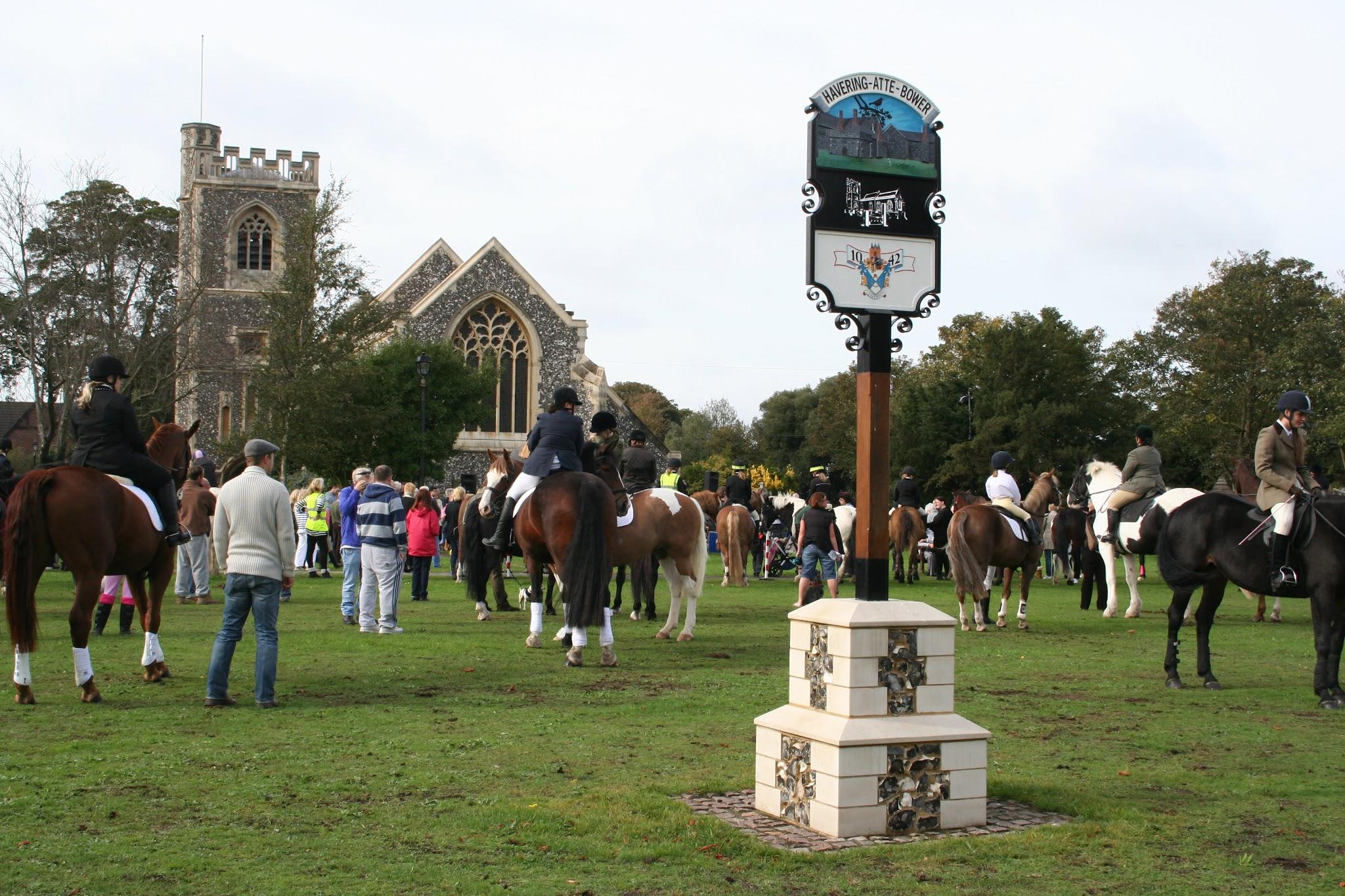
The following text was copied from Wikipedia, just for the purposes of testing:
The history of Havering dates back at least to Saxon times, with the format of the name indicative of an early Saxon settlement[3] while archaeological finds in and around Havering Country Park suggest a Roman villa or similar structure in the area. The village is also steeped in royal history and Edward the Confessor was the first monarch known to take interest in the area when he established a hunting lodge which, over the years would become a palace or ‘bower’. It is believed, though disputed, that he may have died in the house that he had loved so much before being buried at Westminster Abbey. It appears that Havering retained this royal connection as the Domesday Book lists it has been in the possession of King Harold in 1066 and King William in 1086. At that time there were 45 households and the land consisted of 100 acres of meadow with additional woodland and a mill.[8]
The surrounding areas, including the parishes of Hornchurch and Romford,[9] formed the Royal Liberty of Havering from 1465 to 1892.[9] Until the 17th century, royalty used the house of Havering Palace for various reasons, adding the architectural style of the day to the expanding palace.
Another palace, east of the village, called Pyrgo, was purchased by Henry VIII to relieve the now ageing Havering Palace. By the 17th century, the Royal Palace of Havering was in decline, and it was eventually pulled down. Pyrgo was also demolished later, in the 18th century. Only one set of plans exists from the original Havering Palace, courtesy of a survey by Lord Burghley in 1578.
The village green still has on display its original village stocks, while on the opposite side of the road is a pond known as “Ducking Pond”, rumoured to have been used for trials of witches. Though the name of the pond suggests such a history, hard evidence is yet to be uncovered. However, there are currently plans to construct a replica ducking stool at the site.
On 1 April 1965 the civil parish was abolished.[10] At the 1951 census (one of the last before the abolition of the parish), Havering atte Bower had a population of 5812.[11]